
The One Thing Every Leader Skips (That Changes Everything)
Part 4 of 4 in the GBT Leadership Development Framework Series
Over the course of this series, we have walked through three phases of leadership development: leading self, leading others, and leading the organization at scale. Each phase builds on the one before it. Each one requires something different from you as a leader.
But there is one thing that makes all three possible. One practice that shows up at every level of the framework, that leaders consistently acknowledge they need, and just as consistently deprioritize.
Creating space.
What Space Actually Means
Not a spa day. Not an annual offsite. Space is deliberate, protected time to think, reflect, and plan, built into the regular rhythm of your work.
It sounds obvious. In practice, it is rare. Most leaders operate in a near-constant reactive mode: responding to what is in front of them, moving from meeting to meeting, putting out the next fire. The work of genuine leadership development, the kind that produces lasting change, requires stepping out of that loop long enough to actually look at it.
Coaching creates that space structurally. A good coach gives you one hour to examine how you are doing things, not just what you are doing. But you do not need a formal coaching engagement to get started. You need a commitment to the time.
The Most Common Objection
Almost every leader, at some point, says some version of this: I do not have time for this.
It is worth sitting with that statement. Because what it often means is: I am too busy reacting to invest in what would reduce the reacting.
Think about it the same way you would physical health. You can stay in the cycle of not exercising because you are tired, or you can make the time and find that you have more energy. The investment pays back more than it costs.
If you are skeptical, try an experiment: block thirty minutes, three times a week, for three weeks. Use it to reflect on one question that matters to you as a leader. Notice what happens.
What to Do With the Space
Space without structure can feel unproductive, especially for leaders wired to be in action. A few ways to use it well:
Reflect on patterns. Where did strong emotions come up this week? What triggered them? What do you notice?
Start small. Do not try to solve a five-year organizational challenge in your first session. Pick one specific thing that feels off or unclear and sit with it.
Ask better questions. Instead of "what is going wrong," try "what do I need to get where I want to go?"
Make it sustainable. It does not need to happen at your desk. A walk, a cup of tea, a drive with no podcast playing: the environment matters less than the consistency.
Why This Is the Thread That Connects Everything
Self-awareness requires space to develop. You cannot notice your triggers if you are never still enough to observe them.
Psychological safety requires space to build. Trust does not grow in the cracks between urgent tasks. It develops in the moments when a leader deliberately slows down to listen, to acknowledge, to be present.
Organizational transformation requires space to plan. The shift from reactive to strategic only happens when you have protected time to look forward rather than sideways.
Space is not a luxury at the edge of the leadership development journey. It is the container that makes the journey possible at all.
“You cannot create change if you do not make the time. It is the same as anything else that matters: you have to decide it is worth making room for.”
If this series has resonated with you, the GBT Leadership Development Program is designed to walk you through all three phases with the structure, support, and space to make real change. Learn more about the program here.
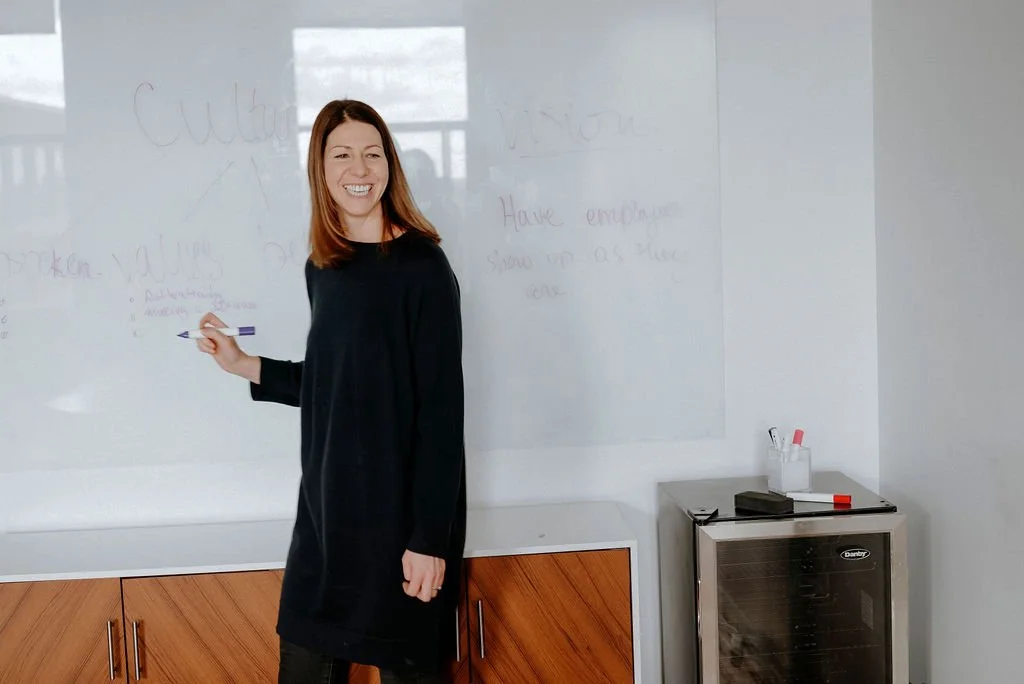
Genevieve Retzlaff discussed the full framework on the Courage of a Leader podcast in the episode “A Proven Blueprint for Developing Yourself as a Leader”.
This post is part of a four-part series on the GBT Leadership Development Framework.
Part 1: Why Leadership Development Has to Start With You
Part 2: How to Create Psychological Safety on Your Team (And Why Vulnerability is Not a Weakness)
Part 3: Leading at Scale: How to Bring Your Organization Into the Future of Work
Part 4: The One Thing Every Leader Skips (That Changes Everything) - this post
Ready to explore the full GBT Leadership Development Program?